There are two types of differences between a book and its film adaption: tolerable, and intolerable.
When a book is made to screen, time is a humongous obstacle. And it is so especially for Harry Potter, a lengthy series of books full of adventures and complicated events. Thus cut, cut, cut — a big part must be trimmed to fit into so limited running time of movies. On the other hand, motion-picture is a completely different language. Therefore there must be particular details that should be changed to make better visual effects or artistic angles. Additional, certain modifications are sometimes made to make more or less of a surprise to audience who already know the books by heart. I understand that all of these differences are acceptable.
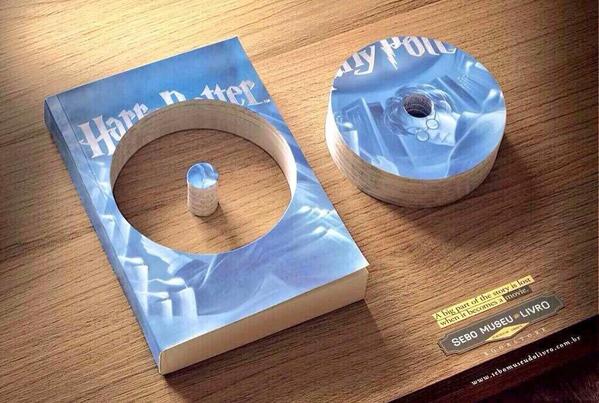
However, the spirit and characteristics of the main roles as well as the nature of a sub-story should always stay put. And Harry Potter movie makers have made unforgivable mistakes of not keeping original personalities of some leading characters. Here I am talking about just one mite-but-mighty detail that was changed in Harry Potter and the Chamber of Secrets to make one of the best and simplest examples to the point.
Who told Harry what Mudblood was?
In the book, Draco Malfoy insulted Hermione Granger with the word “Mudblood”, which both she and Harry did not understand until Ron explained its meaning to them. In the film it was the opposite. Hermione was deeply aggrieved by the offence and later on had to explain what it was to Harry (and even probably Ron).
Why does this seemingly trivial thing capture that much of my concern?
First, think of the book Chamber of Secrets now. It was a crucial part of the saga that led the readers to a huge conflict in the wizarding world: clashes of viewpoints on blood statuses in the integration with discriminations upon classes and species. If the first book of the saga was mostly about the beautiful and magical side of the wizarding society, the second started to show its dark sides to readers.
We all know that J.K. Rowling wrote about the wizards for “Muggles” to read. It’s partly why she wrote under the point of view of Harry Potter, a young wizard who grew up in the Muggle world and only knew of the wizarding world at the age of 11. He entered it with eagerness but not less anxiety for a completely new life, and our author told us how he got used to it step by step — through which she showed us Muggles what the wizarding world was like.
The curtain gradually rose to reveal us every detail through what Harry was told and experienced. And one of the most essential guides for him was his sidekick, Ron Weasley. In contrast to Harry, Ron was a pureblood, born and grew up in the wizarding community. He did not fully know what was new to Harry and Hermione and what was not — but he was always helpful when asked. Perhaps he was the best teacher to Harry as well as to readers when it came to beliefs and culture of British wizards.
Hermione knew a lot, but not very close to her “know-it-all” title, she only read stuff in books. Her parents were Muggle, thus apparently she had not known she was a witch long before Harry, and also officially joined the wizarding world at the same time with Harry. And not everything was mentioned in books — “Mudblood” wasn’t. At that time it was a very bad offensive insult that even a polite and educated racist would not say in public, thus you could hardly hear of it unless you have stayed a long time in the wizarding community.
But the screenwriter did not notice that, he let Hermione explain it to Harry — and audience — instead of Ron. There is no excuse for this change — no minute was saved, no visual art was developed. They simply wanted to portray a perfectly know-it-all Hermione, and perhaps to them Ron was only a comical relief but no more.
This change did not only distort the fact about what characters should or should not have known — or crucial differences between pureblooded and Muggle-born wizards’ common sense and awareness — but also ignored an important part of the story: the bonds between and vital roles of the Trio. If Hermione could really know everything and Ron was only a comedian, there was no way they could become best friends and make it to the history with all they did.
Harry Potter with all of his pluses and minuses needed both of his friends: one clever and well-read but with similar Muggle background, and one acquainted with all the wizard things and willing to share and help. Ron was like a bridge for Harry to the world that he had not been a part of throughout his childhood, and even Hermione needed this bridge too (didn’t she go to the Burrow or the Leaky Cauldron to join the Weasleys every summer?).
In short, the changes in the roles of Ron and Hermione made in the movies, of which one was well reflected in the above detail, were inexcusable and intolerable mistakes of the filmmakers.
 Kaleidoscope Eyed